Highlights from Milan Fashion Week S/S 2026
Milan Fashion Week has always promised drama and grandeur, but this season feels distinctly transformative.

The city is alive with creative director debuts, moving farewells, and an atmosphere that cements its role as one of fashion’s most influential capitals. From Demna’s understated entry at Gucci to Louise Trotter’s much-anticipated unveiling for Bottega Veneta, Spring/Summer 2026 is already shaping up as a season to remember.
The week opened on 23 September with Demna’s quiet debut at Gucci – not through a runway, but via The Tiger, a Spike Jonze and Halina Reijn-directed short film that hinted at his vision for the house. The following day, Simone Bellotti assumed the reins at Jil Sander, marking a new beginning after Luke and Lucie Meier’s decade-long era. Later, former Miu Miu designer Dario Vitale introduced his first collection for Versace in an intimate yet daring presentation. Just last night, Louise Trotter revealed her take on Bottega Veneta, one of the rare female appointments in the sweeping reshuffles that defined 2025.
Yet, amid all these debuts, the season carries a solemn tone: Milan is preparing to honor Giorgio Armani, who passed away earlier this month at the age of 91. A tribute show dedicated to his legacy will close the week, celebrating a career that helped shape the identity of Italian fashion.
This Fashion Week is not only about premieres; it’s about legacy. Milan, more than ever, stands as both guardian of tradition and cradle of innovation.
Dolce & Gabbana

On Saturday, the Metropol Theatre turned into a glamorous pyjama party, blurring the lines between cinema and couture. The cast of the upcoming Devil Wears Prada sequel – Meryl Streep, Stanley Tucci, and newcomer Simone Ashley – arrived in character, creating a frenzy that even drew a smile from Anna Wintour.
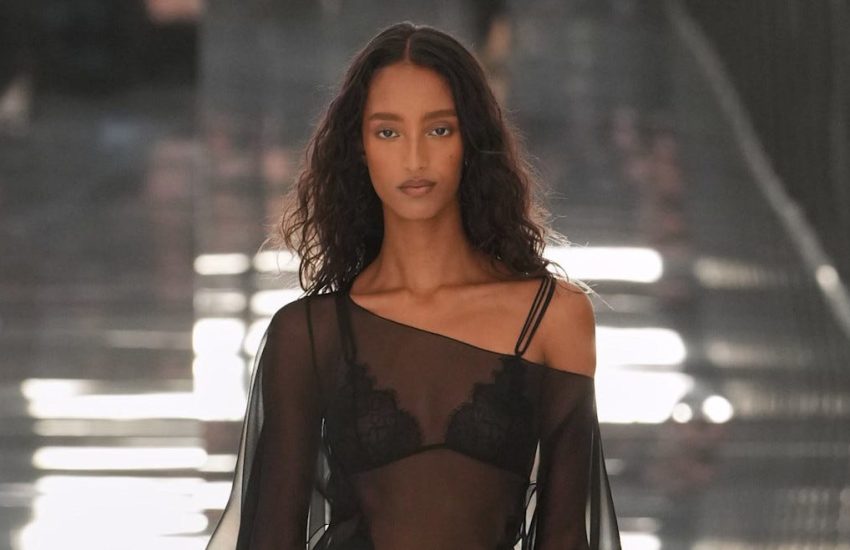
On the catwalk, Domenico Dolce and Stefano Gabbana reimagined their “Pyjama Boys” menswear theme for women. Crystal-studded striped sets, sheer robes, lace bodysuits, and lingerie-inspired designs set a sensual tone. Footwear swung between extremes: plush slippers and skyscraper stilettos. When Meryl Streep’s Miranda Priestly persona smirked in approval, it was a fitting seal of approval for a show that merged theatricality with the designers’ signature flair.
Versace

Dario Vitale’s debut for Versace unfolded at the Pinacoteca Ambrosiana, transformed into the scene of a decadent afterparty. With an unmade bed, empty glasses, and ashtrays as set pieces, the atmosphere evoked glamour’s messy, human side.
The collection was a study in contrasts: plunging mini dresses revealing flashes of underwear, oversized tailoring in vivid hues, and chainmail-inspired metallics mingled with bold baroque prints. Vitale avoided literal archive references, instead channeling Gianni Versace’s spirit of audacity and allure. “It’s about the feeling of Gianni, the feeling of this company, the feeling of its legacy,” he explained backstage. His first outing balanced homage with fresh provocation – a bold reimagining of the house’s DNA.
Max Mara

For Spring/Summer 2026, creative director Ian Griffiths drew on Madame de Pompadour, the witty and powerful muse of Louis XV. The collection, dubbed “Rococo Modern,” merged 18th-century grandeur with the refined minimalism that defines Max Mara.
Trench coats came with exaggerated “corona” sleeves, organza petals floated across dresses, and brocade florals played against sharp tailoring. Hair was styled back with thick black bands, recalling Pompadour’s iconic coiffure, while slim belts punctuated cropped tailoring. The result was a collection that married history and modernity, both cerebral and effortlessly wearable.
Prada

Miuccia Prada and Raf Simons’s latest womenswear collection at the Fondazione Prada explored the tension between uniformity and individuality in today’s algorithm-driven world. Stripping back the set to a stark orange-lacquered floor, the designers framed their vision around the idea of the uniform, reimagined as a source of protection, neutrality, and even elegance. Structured shirts and pleated trousers met playful details like jewel-toned earrings and mock-croc handbags, while flashes of glamour—opera gloves, crystals, and sculptural taffeta—broke through the sobriety. Skirts spliced with ruffles and pleats, as well as draped tops, embodied the designers’ pursuit of “shape without structure.” Ultimately, the collection embraced adaptability and autonomy, offering women the freedom to compose their own identities through clothing, moving away from rigid forms toward a vision of liberation both physical and psychological.
Fendi

At Fendi, Silvia Venturini Fendi leaned into optimism and playfulness in her second season leading both women’s and menswear. The setting, designed by Marc Newson, featured stacks of colorful blocks that echoed the collection’s energy.
The mood was eclectic yet forward-thinking: pleated skirts with sporty toggle fastenings, sheer sweatsuits lined with shearling, and oversized woven totes in bold primaries. The beloved “Peekaboo” bag appeared with a sparkling sequin-lined interior, adding an element of surprise. It was a collection brimming with joy – a vibrant vision of a summer yet to come.