Inside Fendi’s Sultry Spring 2027 Celebration of Femininity and Form
Maria Grazia Chiuri has built much of her career around examining femininity through fashion. Whether drawing from powerful women in history, artists or cultural icons, the Italian designer has often used clothing to explore ideas of identity, independence and the female experience. At Fendi, where she now serves as chief creative officer, that interest remains firmly intact.
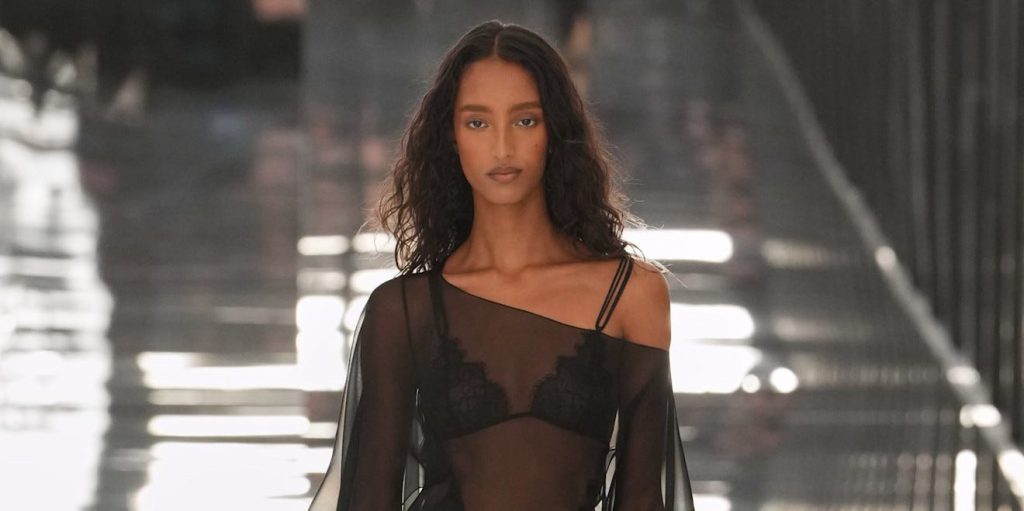
For Spring/Summer 2027, Chiuri placed the human body at the heart of the conversation, creating a collection that explored intimacy, sensuality and freedom through sheer fabrics, lingerie-inspired pieces and revealing silhouettes.
Her starting point was an unmistakably Italian cultural icon: Raffaella Carrà.
The beloved singer, dancer and television personality became the collection’s central muse, with Chiuri looking particularly toward Carrà’s legendary performances and her distinctive approach to glamour. Her energetic presence, unapologetic sensuality and body-conscious wardrobe provided a blueprint for a collection that feels both nostalgic and thoroughly contemporary.
Chiuri has cited Carrà’s celebrated performance with Adriano Celentano on the Italian television program Milleluci as an important reference. The performance, with its choreography and theatrical setting, captured the designer’s interest in the idea of bodies moving together and existing in relation to one another.
That concept translated directly onto the runway.
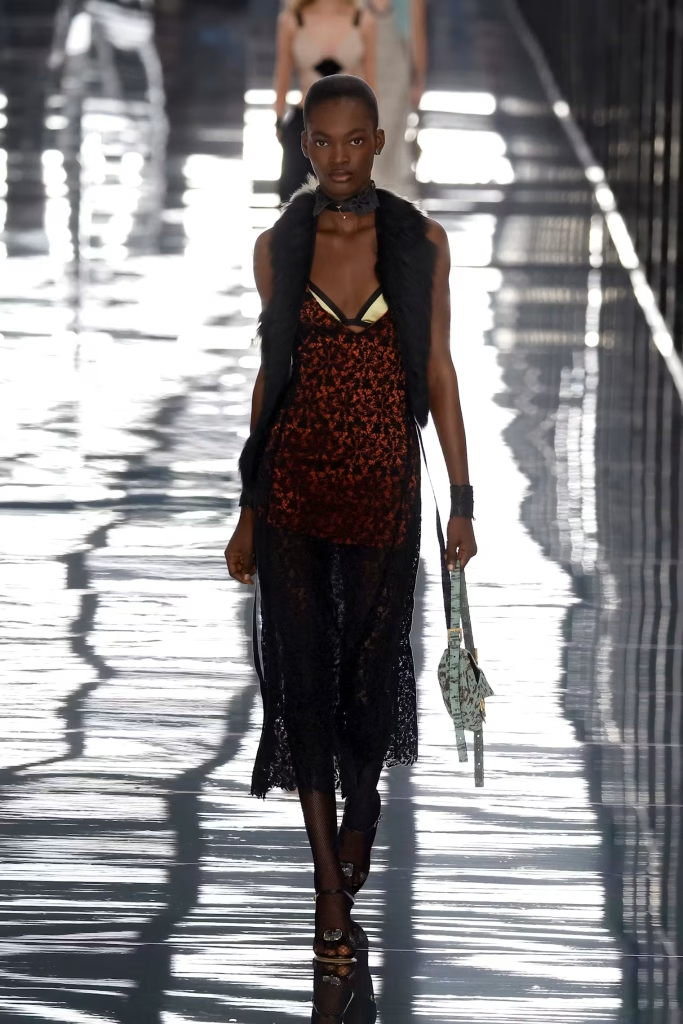
Carrà’s signature style was built around clothes that celebrated the figure, from fitted catsuits and mesh tops to flared trousers and sparkling bralettes. Chiuri revisited those codes for Fendi, giving them a more contemporary edge.
A particularly memorable look took the classic Carrà catsuit and transformed it into a sleek black jersey jumpsuit with long sleeves, exposed shoulders and silver grommet embellishments. Elsewhere, shimmering maxi dresses channeled the glamour of the 1970s, conjuring images of late-night parties, disco lights and the extravagant energy of Studio 54.
Yet beneath the retro references was a more personal exploration of the body.
Lingerie played a major role in the collection, reflecting an ongoing fashion movement toward wearing underwear as part of an outfit rather than keeping it hidden. Satin shorts trimmed with lace appeared alongside matching triangle bras, offered in delicate shades of teal and peach as well as timeless black.
The styling made no attempt to disguise the lingerie. Instead, it turned traditionally intimate garments into visible components of the look.
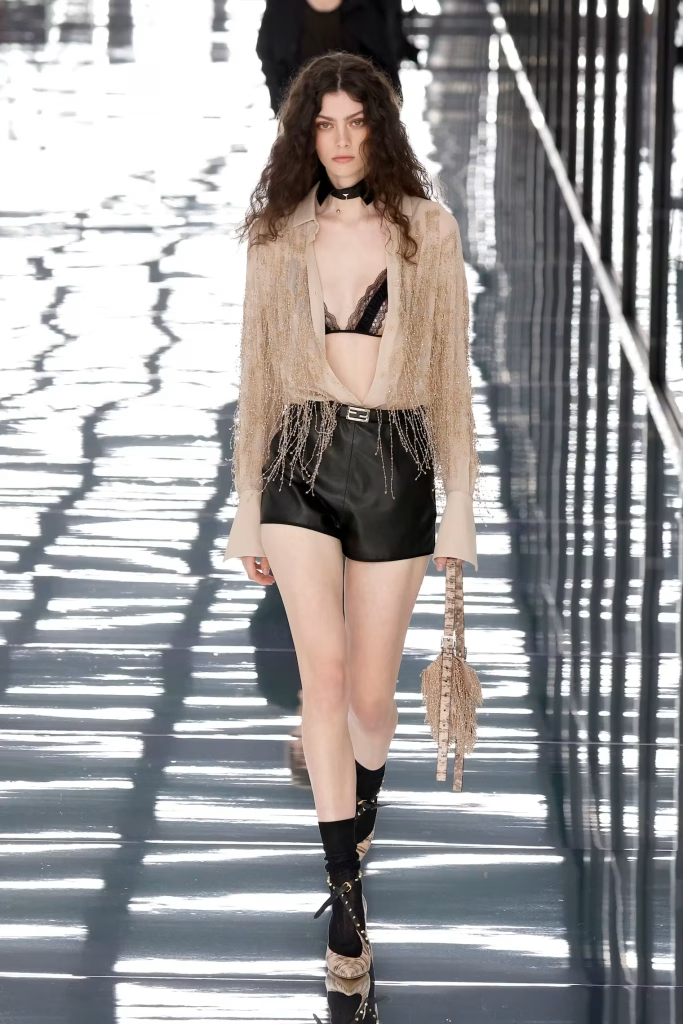
That approach extended throughout the collection. Deep necklines revealed flashes of skin and lace, while transparent chiffon dresses allowed the body and layers underneath to remain visible. Fringed tunics offered glimpses of lingerie, and thigh-high playsuits incorporated side openings that highlighted the natural shape of the wearer.
The effect was provocative, but it was also closely connected to Chiuri’s broader interest in how women relate to their bodies.
For the designer, the conversation begins with clothing that is traditionally associated with intimacy. From there, it expands into questions about femininity, desire and what happens when the body becomes part of a relationship with another person.
Chiuri also drew inspiration from E. E. Cummings’ poem I Like My Body When It Is With Your, using the text as another way to consider the body not simply as an object, but as something connected to emotion and human interaction.
That perspective gave the collection an emotional dimension beneath its overtly sensual appearance.
The official show notes similarly emphasized the complicated relationship between fashion and the body, describing contemporary bodies as both powerful and vulnerable. Chiuri’s designs acknowledge that duality through pieces that reveal and conceal at the same time.
A plunging neckline can expose the chest while an oversized garment creates volume around it. A sheer dress can reveal the silhouette beneath while still maintaining layers of fabric. Lingerie can be openly displayed while retaining its associations with privacy and intimacy.
These contrasts became one of the collection’s defining characteristics.
Fendi’s craftsmanship also ensured that the provocative silhouettes never felt disconnected from the house’s luxury identity. Delicate fabrics, embellishment, precise construction and sophisticated styling elevated the revealing pieces beyond simple statements of sex appeal.
At the same time, the collection’s Italian references gave it a sense of personality. Carrà’s influence brought movement and theatricality to the runway, recalling a period when Italian television, music and fashion were deeply intertwined.
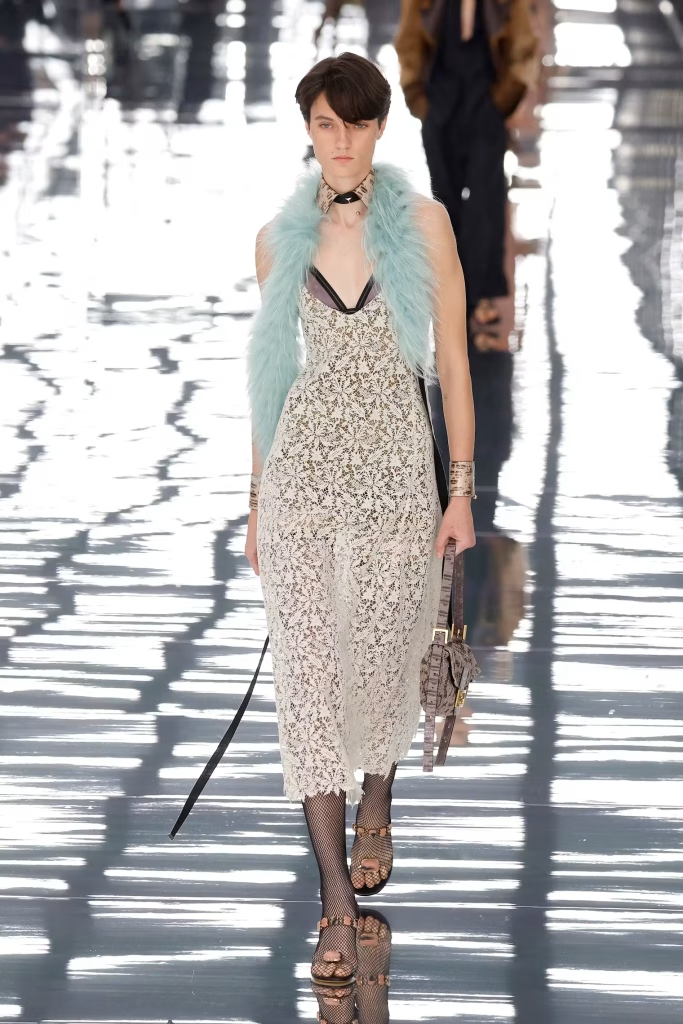
Chiuri ultimately uses those references as a starting point rather than a strict template. The goal is not to recreate Carrà’s wardrobe piece by piece, but to capture the spirit behind it: confidence, physical freedom, glamour and an unapologetic relationship with the body.
That makes Fendi’s Spring/Summer 2027 collection feel less like a straightforward exercise in nostalgia and more like a contemporary reinterpretation of an iconic Italian attitude.
From sparkling dresses and sculpted jersey to exposed lingerie and transparent layers, the collection consistently returns to one central idea: the body should be experienced, not simply dressed.
With Raffaella Carrà as its muse, Chiuri has created a collection that embraces sensuality while exploring the emotional and social meanings attached to the way we reveal ourselves.
For Spring 2027, Fendi is not hiding the body. It is putting it front and center.